Same Company, Three Different Tickers: How to Tell Which Version of a Foreign Stock You Actually Bought
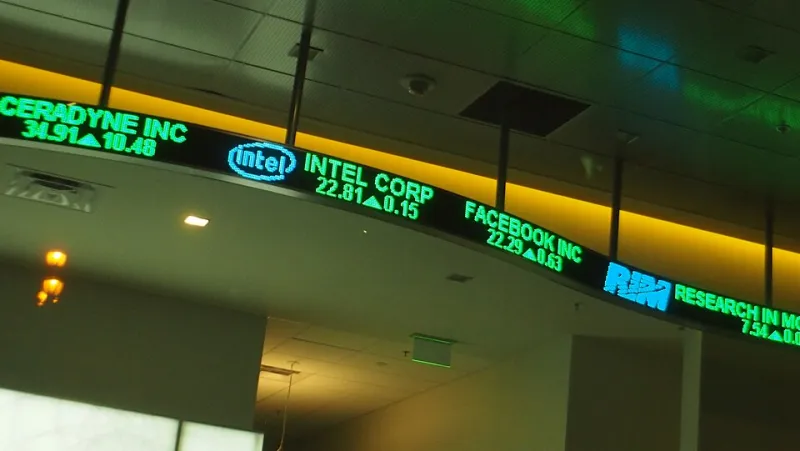
Photo: Francisco Gonzalez, CC BY 2.0, via Wikimedia Commons
You did the work. You read the annual report, sketched out the growth story, and decided that Kestrel Marine Systems — a fictional-but-familiar-sounding Nordic equipment maker — deserves a spot in your portfolio. You type the name into your platform's search bar, one ticker comes up, you hit buy, and you're done. Total elapsed time: about ninety seconds.
Here's the uncomfortable part. Depending on which platform you used, which listing it defaulted to, and which account type you clicked through, you may now own one of three genuinely different instruments. Same company. Same underlying business. Very different rules attached.
The three doors into the same building
When a non-US company wants its shares reachable by American retail investors, there are roughly three paths.
The ADR (American Depositary Receipt). A US bank — BNY Mellon, Citi, JPMorgan, Deutsche Bank and a handful of others dominate this space — holds the actual foreign shares in custody abroad and issues a US-traded receipt against them. ADRs trade in dollars on a US exchange, settle like a US stock, and show up in your account looking completely ordinary.
The foreign ordinary share. Usually the company's actual shares, listed on its home exchange, sometimes made available to US buyers through an F-share line or an OTC quote. This is the real thing, not a receipt — but the plumbing around it is built for the home market, not for you.
The local listing. The original ticker on the original exchange, wrapped in the original currency. Some platforms will route you here and handle the conversion; some won't touch it at all.
All three may appear in a search results dropdown under nearly identical names, which is exactly where the trouble starts.
Where a one-click global buy quietly changes the deal
Let's walk the Kestrel scenario properly.
You search the name. Your platform surfaces "Kestrel Marine Systems" with a ticker, a price, and a little green arrow. What it often does not surface prominently is the wrapper. So let's say you bought the ADR. Fine. But consider what you just agreed to without reading it.
The ratio. ADRs are rarely one-for-one. One Kestrel ADR might represent two ordinary shares, or a tenth of one, depending on how the depositary bank calibrated the price into a range US investors find familiar. Your dividend per ADR reflects that ratio. So does your exposure. A stock that moved 4% in Oslo might move 40% in your account if the ratio is one-to-ten — in the same direction, but with ten times the leverage on your position size. That's not a scandal. It's just math that the search box didn't show you.
The spread. A Level I ADR trading over the counter can go hours without a meaningful print. The bid-ask spread on a thin ADR might be 1.5% or worse, while the underlying ordinary share in Stockholm trades in a market deep enough to keep spreads near a few basis points. Buy and sell the ADR twice and you've donated several percent to market makers before the company has done anything at all.
The dividend haircut. Foreign companies typically withhold tax on dividends at the source. With a valid W-8BEN on file and a favorable treaty, a US investor might see 15% withheld. Without the paperwork, or where no treaty applies, that number can climb to 25% or 30%. On an ADR, the depositary bank handles the withholding and then may charge a separate per-share depositary fee on top. On a foreign ordinary held directly, your broker's handling of the credit can differ again — sometimes you get the treaty rate, sometimes you get the local statutory rate and a tax-form project in April.
The hours. The ADR trades during the US session, which is convenient and also slightly fictional: it's a claim on shares whose home market is closed, so the ADR price during US hours is a bet on what the home market will do overnight. The ordinary share in Oslo trades when Oslo is open — which for most US readers is somewhere between "early" and "before the alarm." If the company reports earnings at 2 a.m. Eastern, the ADR will gap at the open and there is nothing you can do about it in the moment.
Corporate actions. Splits, rights offerings, tender decisions, votes — an ADR holder participates through the depositary, on the depositary's timetable, sometimes with a fee attached. A shareholder of record in the local market gets the direct treatment. Neither is automatically better; they're just not the same.
Why the ticker keeps surprising people
Branding is global. Wrappers are local. That mismatch is the whole story.
A company's investor-relations page will list "our US listing" with a ticker that looks authoritative. Meanwhile a Level I unsponsored ADR — created by a bank without the company's involvement — can exist under a different symbol with thinner liquidity and no reporting obligations to the SEC. Two tickers, one company, and only one of them is the one the CFO was talking about.
Add in platforms that occasionally quote a foreign ordinary under a symbol that looks like an ADR, and you get the classic scenario: an investor buys what they think is a blue-chip ADR and ends up holding a thinly traded OTC line with a wide spread and a dividend that arrives minus a withholding rate they never expected.
The pre-trade checklist
Before you click, spend four minutes here. It's the cheapest due diligence you'll ever do.
- Read the full instrument name, not just the ticker. Look for "ADR," "sponsored," "unsponsored," "ordinary shares," or the exchange code. If the platform won't tell you plainly, that's information too.
- Confirm the ADR ratio. One ADR equals how many ordinary shares? Divide your intended position accordingly.
- Check the average daily volume on the specific line you're buying — not the company, not the home listing. The ADR line.
- Look at the spread right now, not last week. Wide spreads on a quiet Tuesday are a warning.
- Find the dividend withholding rate for that country's US treaty, and confirm your broker has a current W-8BEN on file.
- Note the depositary fees, if any, and whether they're charged per share per year.
- Write down the home exchange and its hours so you know when the real price discovery happens.
- Check whether the company itself sponsors the ADR — sponsored programs come with better disclosure and a named depositary.
- Compare the ADR price to the ordinary share price, adjusted for the ratio and the current exchange rate. If the gap looks persistent rather than momentary, you're probably looking at liquidity, not opportunity.
The bottom line
Global access is genuinely useful. The ability to own a piece of a company headquartered in Zurich, Tokyo, or Copenhagen from a laptop in Ohio is one of the better things the last few decades produced.
But "global access" is a description of the plumbing, not a guarantee about what comes out of the tap. The ticker on your confirmation screen is a label on a wrapper. Know which wrapper you bought, and the rest of the trade — the leverage, the spread, the tax, the timing — stops being a surprise and starts being a decision you made on purpose.
That's the difference between easy access and easy money. Only one of those is actually on offer.