Global by Logo, Local by Holdings: A 15-Minute Reality Check for Your Trading Account
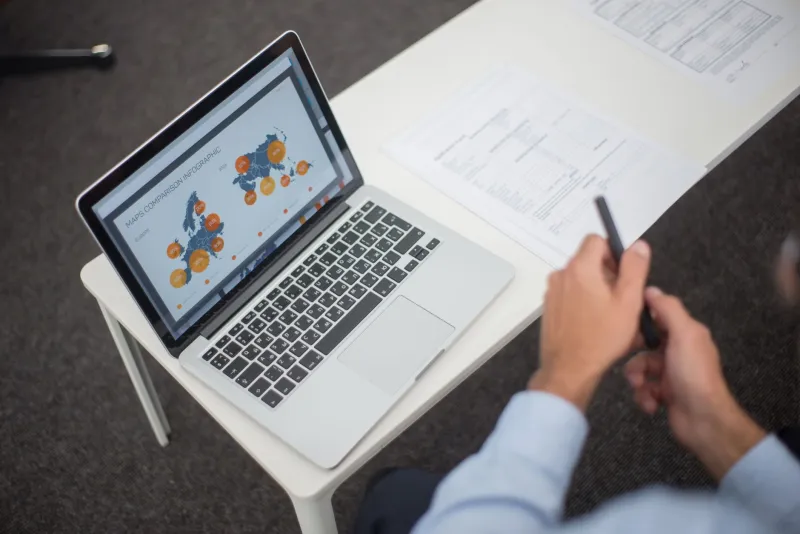
You open your trading app, see a world map, a list of exchanges, and a banner promising access to markets from Tokyo to Frankfurt. It feels international. It feels diversified. But here is the uncomfortable question: does the account actually hold a global mix of businesses, or is it mostly the same US mega-caps wearing different tickers?
That is not a knock on global platforms. Access is genuinely useful. But access and exposure are two different things. One is a feature on a login screen. The other is what determines whether your portfolio zigs when the S&P 500 zags. The good news is you do not need a research team to tell the difference. You need about 15 minutes and a willingness to click past the dashboard.
Start With the Difference Between Access and Exposure
A global trading account can let you buy stocks in a dozen countries. That does not mean your money is spread across a dozen economies. Plenty of accounts marketed as international end up holding US-listed ETFs, American Depositary Receipts, and familiar names that happen to earn revenue abroad.
That can be fine. It can also be a letdown if you assumed the label meant something more. So before you judge the platform, judge the portfolio. Pull up your holdings and get ready to look underneath the hood.
Minutes 1 to 3: Find the Real Country Mix
Open your holdings list and sort by weight. For each top position, check two things: where the company is domiciled and where it actually earns money. Those are not always the same. A company can be listed in New York and earn most of its revenue in Europe. An ETF can trade in dollars and hold businesses across Asia.
If you own funds, open the fact sheet and find the country breakdown. Do not stop at the fund name. A fund called Global Opportunities can still have a heavy US tilt. A fund called International Growth can still include US-listed names. Look for the actual percentages.
Red flags: your top 10 holdings look almost identical to the S&P 500; your international fund has more than half its assets in the US; or your global exposure is mostly ADRs of companies you already own through a US index fund.
Minutes 4 to 6: Check the Currency Layer
Currency risk is one of the easiest things to miss because it does not always show up as a line item. If you hold foreign stocks or unhedged international funds, the dollar's moves can affect your returns even when the underlying business does nothing unusual.
Look at your cash balances. Are they all in US dollars? That is normal for many US brokerage accounts, but it means every foreign purchase involves a currency conversion somewhere. Find out what that conversion costs. Check whether your international funds hedge currency or leave it unhedged. Neither choice is automatically right, but you should know which one you own.
Red flags: the platform advertises global access but hides FX spreads in the fine print; every fund is unhedged and you did not realize it; or you are holding foreign cash without knowing whether it earns interest or gets converted automatically.
Minutes 7 to 9: Look Through the Wrapper
ETFs and ADRs are wrappers. They are convenient, but they can make a portfolio look more diversified than it is. For each fund, check the top 10 holdings. For each ADR, check the underlying company and its ordinary shares. Then ask a simple question: how much overlap is there?
It is common to own five different global funds and discover they all hold the same handful of mega-caps. That is not a crime, but it is not diversification either. It is the same trade in different packaging.
Red flags: multiple funds with nearly identical top holdings; a global fund dominated by US technology names; or an ADR with thin trading volume that behaves nothing like the foreign-listed shares it represents.
Minutes 10 to 12: Check Liquidity and Spreads
International markets can be less liquid than the US market, especially outside the largest names. That matters because a wide bid-ask spread is a cost you pay whether or not the trade works out. Pull up the average daily volume and the current spread for a few positions. If the platform only shows a last price, look elsewhere for the spread.
Use limit orders when you can. Easy access to a market does not mean easy exits at a fair price. A stock can be perfectly legitimate and still be expensive to trade if the order book is thin.
Red flags: no visible spread; market orders encouraged on international small caps; or a platform that makes every foreign name feel as liquid as a US large-cap.
Minutes 13 to 15: Map the Trading-Hour Gaps
Global markets do not run on your schedule. Tokyo opens while you are having dinner. Frankfurt closes before New York gets going. That creates gap risk: the price you see when you log in may not be the price you get when the market actually opens.
Check the market hours and holiday calendars for your largest foreign positions. Understand that stop orders are not guaranteed. A stop can trigger and still fill far away from your chosen price if the market gaps. If the platform encourages after-hours trading, know exactly what you are getting into.
Red flags: no holiday calendar; no clear display of local market hours; or a user interface that implies round-the-clock liquidity in markets that are closed.
The Quick Scorecard
Give your account one point for each of these: a clear country breakdown, a visible currency plan, transparent fund holdings, checkable liquidity, and displayed trading hours. Five points means you have a real global setup. Three or four means you have some work to do. Two or fewer means your global account may be more of a travel brochure than a diversified portfolio.
At Global Easy Trade, the whole pitch is that the world should be simple to reach. Fair enough. But simple to reach is not the same as simple to understand. A global account is a tool, not a strategy. The passport is real. The diversification is something you still have to verify.